Patch Notes: Lunar Lava Tubes and the Lockstitch Awl
This week, we explore cavernous, winding tunnels on the moon, and take a look at the lockstitch awl.
Tool of the Week: The Lockstitch Awl
In these dark, stupid, and slop-filled times, we turn past both the digital and the analog to something much more useful and comforting: leatherworking.
Most of the tools you use for a small project are just heavier duty versions of the ones you'd use for paper crafts: leather snips and scalpels instead of scissors, for example.
But sewing is a different question. Leather is much too tough for a normal needle and thread, even a heavy duty one with a thimble. Enter the lockstitch awl:
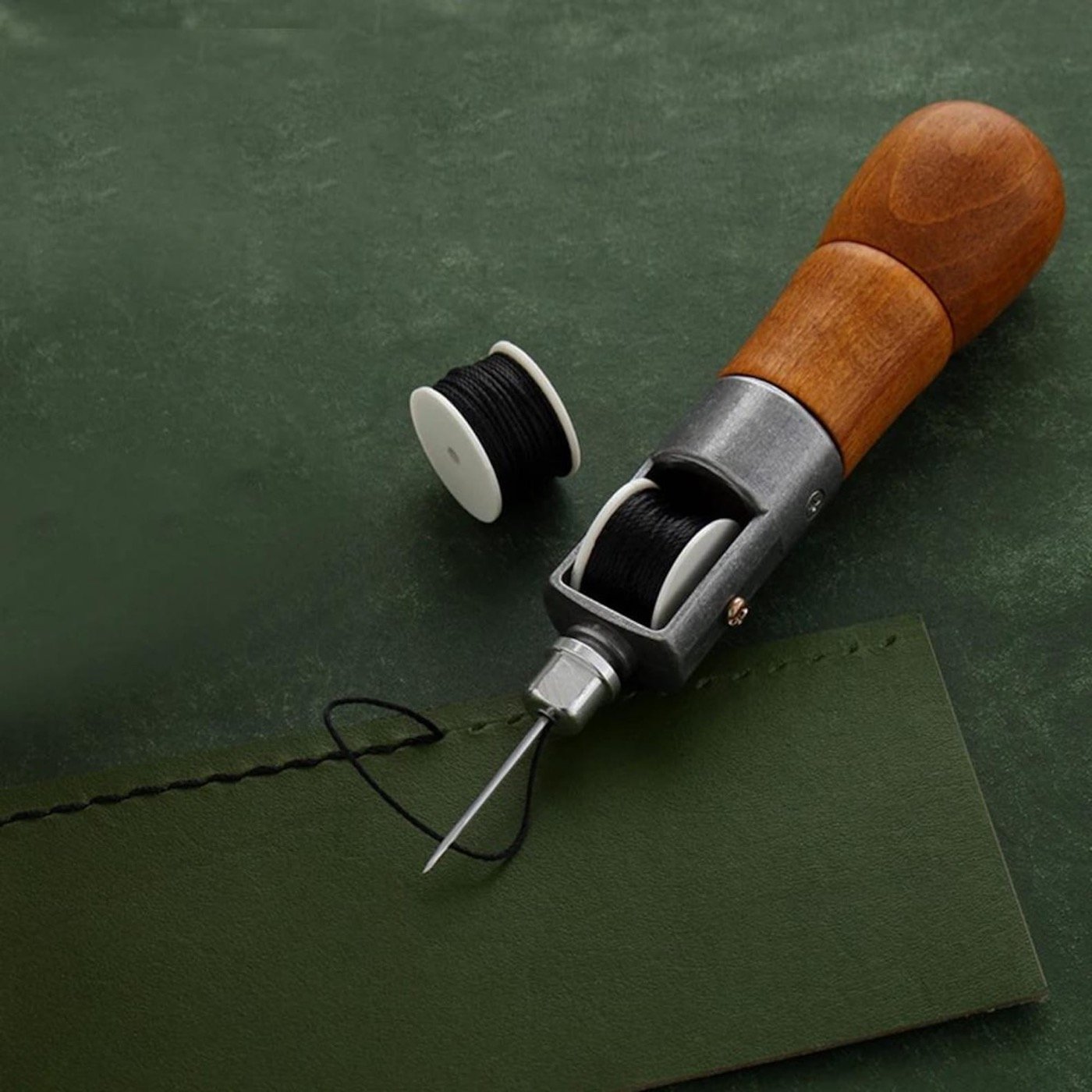
Essentially, a lockstitch awl is a handheld sewing machine. It consists of the awl handle, which is fat enough to let you put some weight into it, and which also contains the spool of thread. It is tipped with a sharp, hollow needle with an eye at the end, through which a sturdy waxed thread emerges.
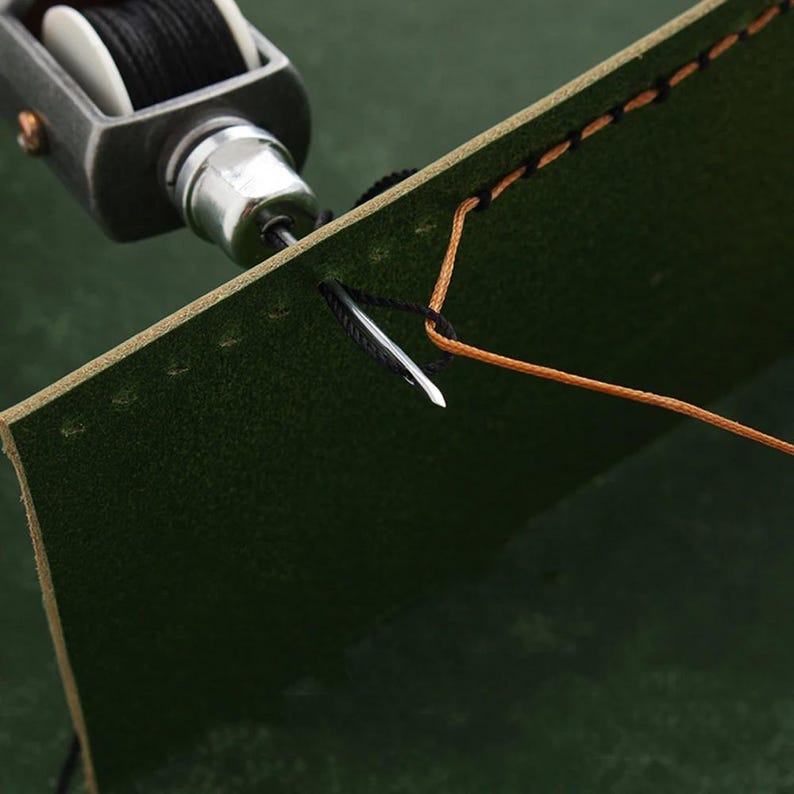
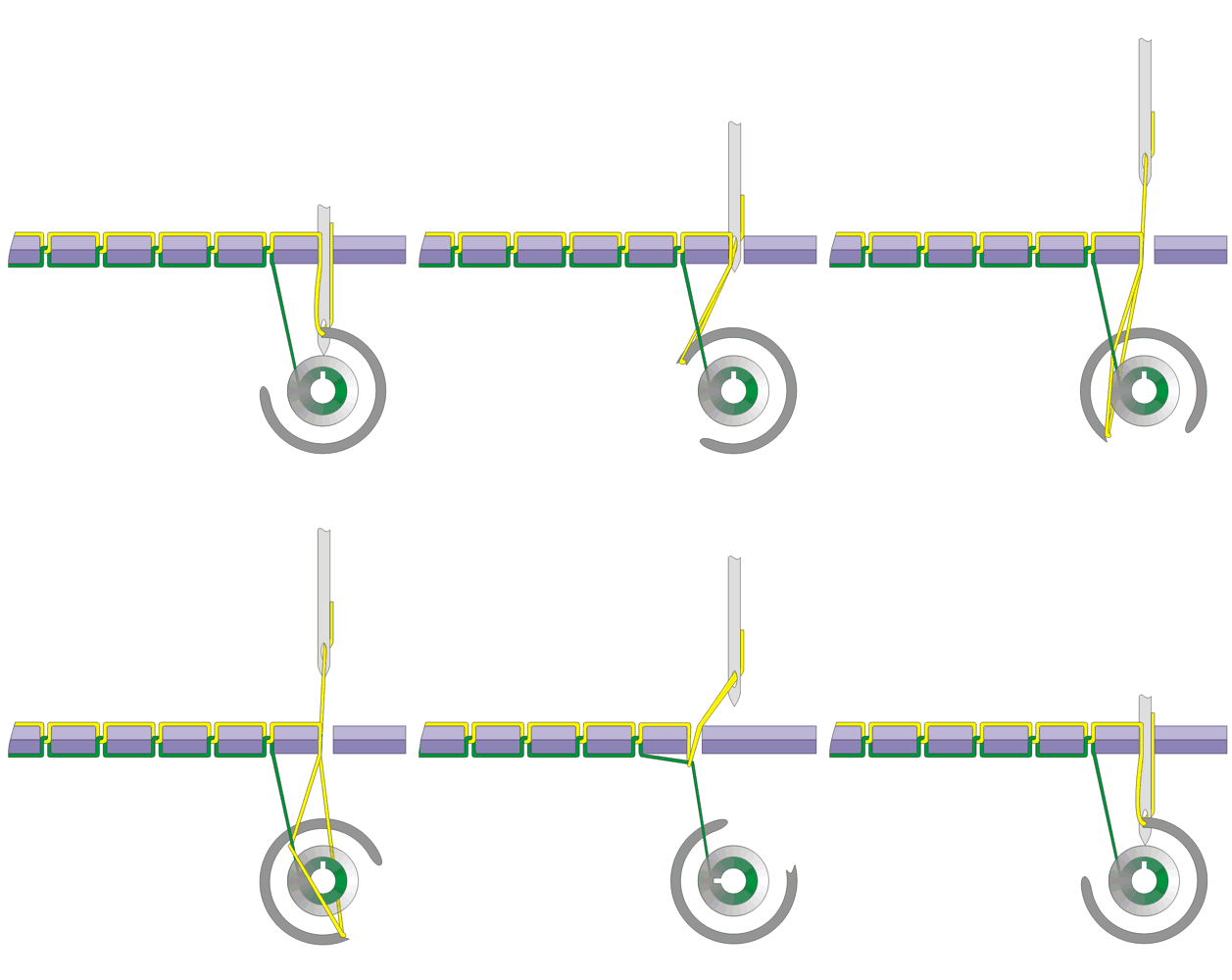
To sew, you punch through the layers of leather using the awl, pull a little bit of thread out, and then retract the awl, making a small loop. You pass a second thread on that side of the leather through this loop, thus "locking" the stitch in exactly the same way a sewing machine does:
The sharpness and power of the awl make it possible to sew just about anything -- sheaves of pages into a journal, for instance, a leather canvas seam, anchors for cord or rawhide rope. Alongside a scalpel or decent set of shears (and some high quality leather), it's all you need to start making your own projects.
Something Interesting: Lunar Lava Tubes
I have always thought of our moon as a quiet and changeless place -- her stillness disturbed only by asteroid impacts and a handful of human beings who visited her half a century ago. But as it turns out, there's more to the story.
The crust and mantle of the moon have a very similar chemical makeup to that of Earth, because they shared the same fiery birth. In the chaotic infancy of our solar system, a planet about the size of Mars called Theia collided with the Earth, ripping it apart and turning all of its stone to molten magma, flinging much of its body in a ring of lava out into space. This ring coalesced into a molten moon, which cooled into the beautiful lady we know and love today.
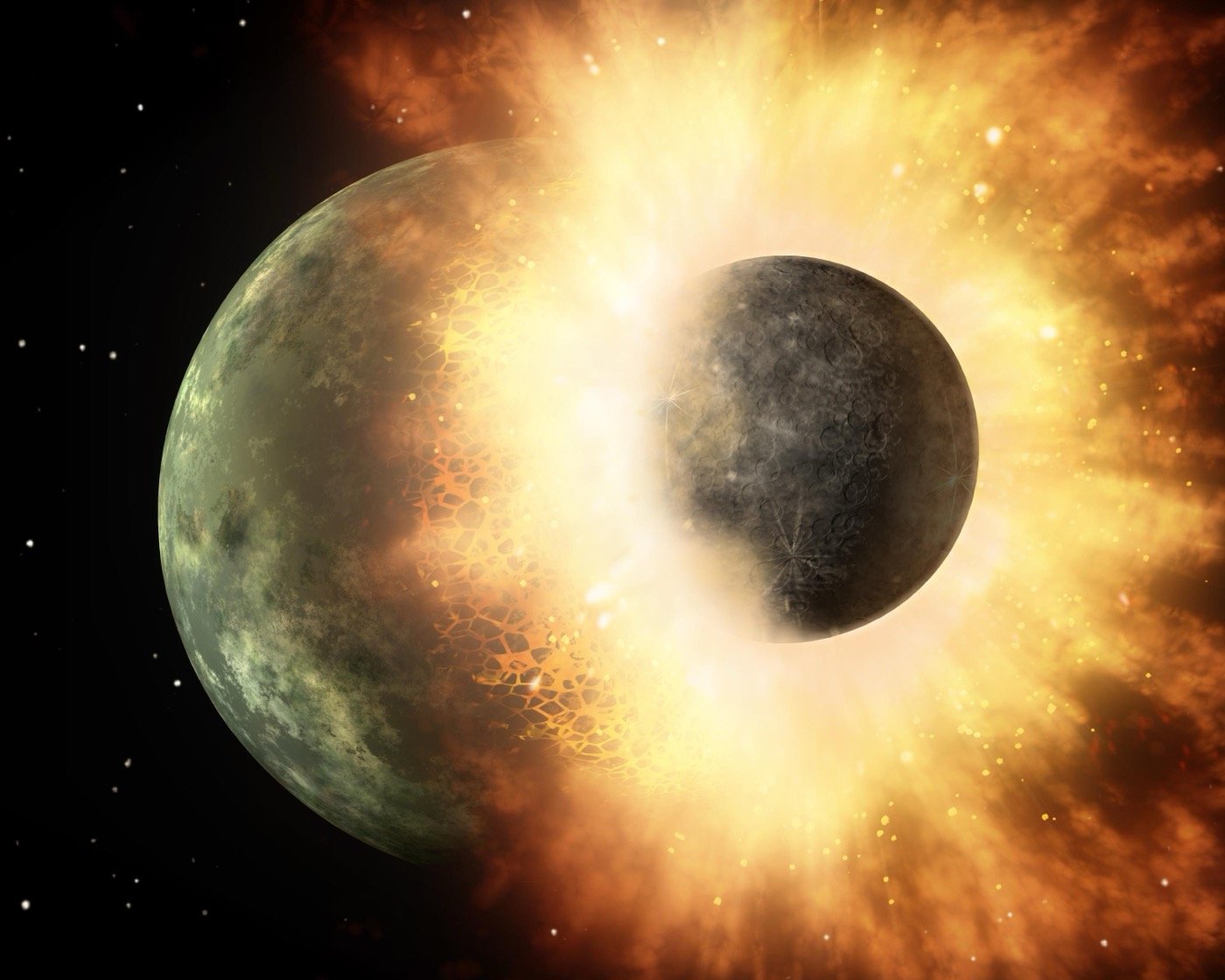
Unlike the Earth, Luna didn't have enough mass to hold onto its water. The extreme heat of the impact boiled much of it off into space in the early eons, and being too small to maintain a rotating liquid metal core beyond its molten youth, it also lacked the magnetic field required to protect what was left. Sunlight and solar wind flensed its surface for the billions of years that followed, paring it down to the bare white and gray rock of its geologic past.
On Earth, where gravity was too great to let that superheated water vapor escape, the rain came as the ground cooled, an atmosphere formed, and interaction of that water with the earth created the dynamic of plate tectonics that constantly reshapes the surface of our world, keeping it young, creating geologic friction that results in earthquakes, landslides, volcanos; the underlay of our ever-changing Terran geography.
Luna, by contrast, was formed by cooling, and by impacts. The great dark regions on her surface, the maria, are the healed wounds of early collisions when the surface was only a hardened skin over a still-molten interior. Those collisions rent the skin of the moon, releasing vast seas of glowing magma that cooled into the dark basalt of the maria. But these weren't the only thing that defined lunar geology.
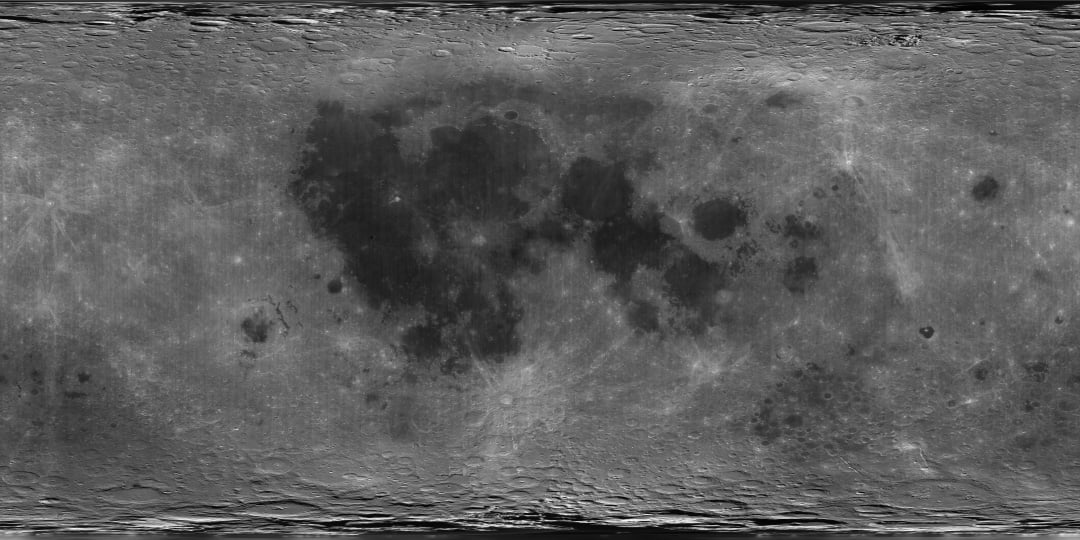
Like the Earth, Luna contained a multitude of radioactive isotopes. As these decay, especially early in their lifecycles, they generate enormous amounts of heat. Without the distributive cycle of Earth's tectonic plate movement, that heat on Luna built up in pockets of geology, re-melting cooled basalts until pressure built up and burst back out onto the surface, creating domes and lava flows. For her entire middle life, from the end of her reformation about 4.5 billion years ago until as recently as 2 billion years ago, Luna was volcanic.
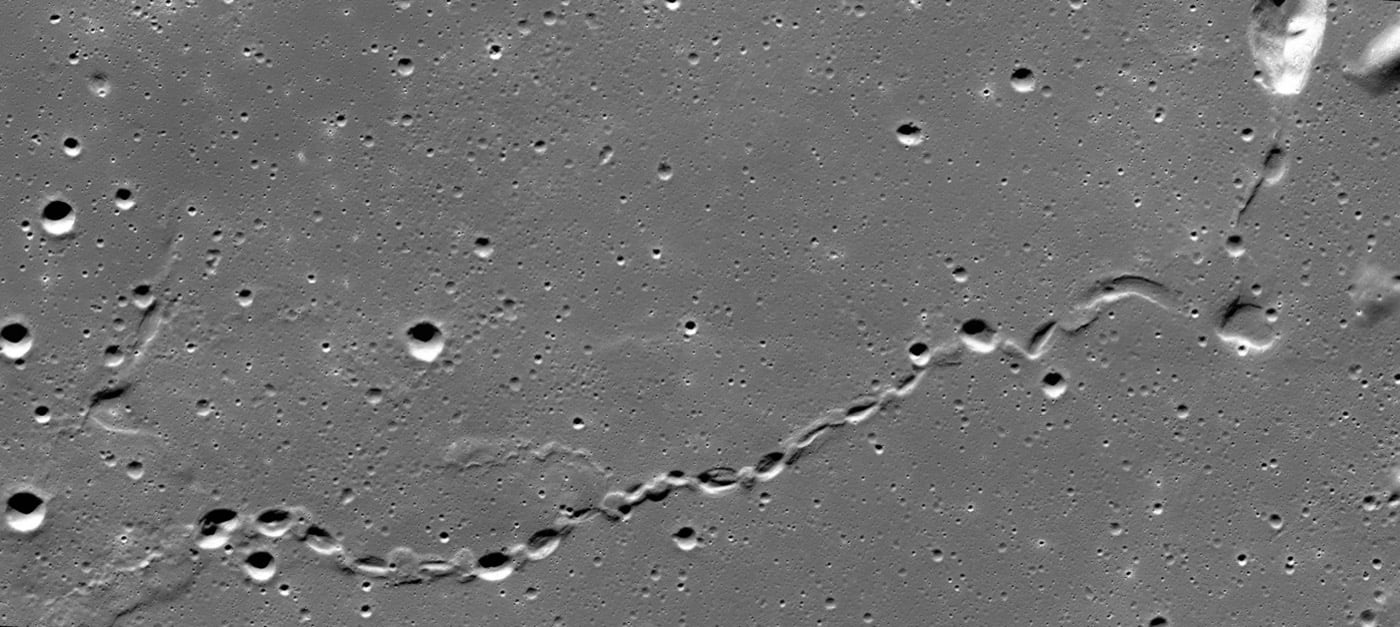
As pressure built in these radioactive magma chambers, the magma would force its way upward through cooler basalt and regolith above, then spill out onto the surface in long, snaking flows. The top cools while the lava beneath is still running, which means the lava flows out of that serpentine half-shell, leaving tunnels under a shallow surface so regular they almost look artificial.
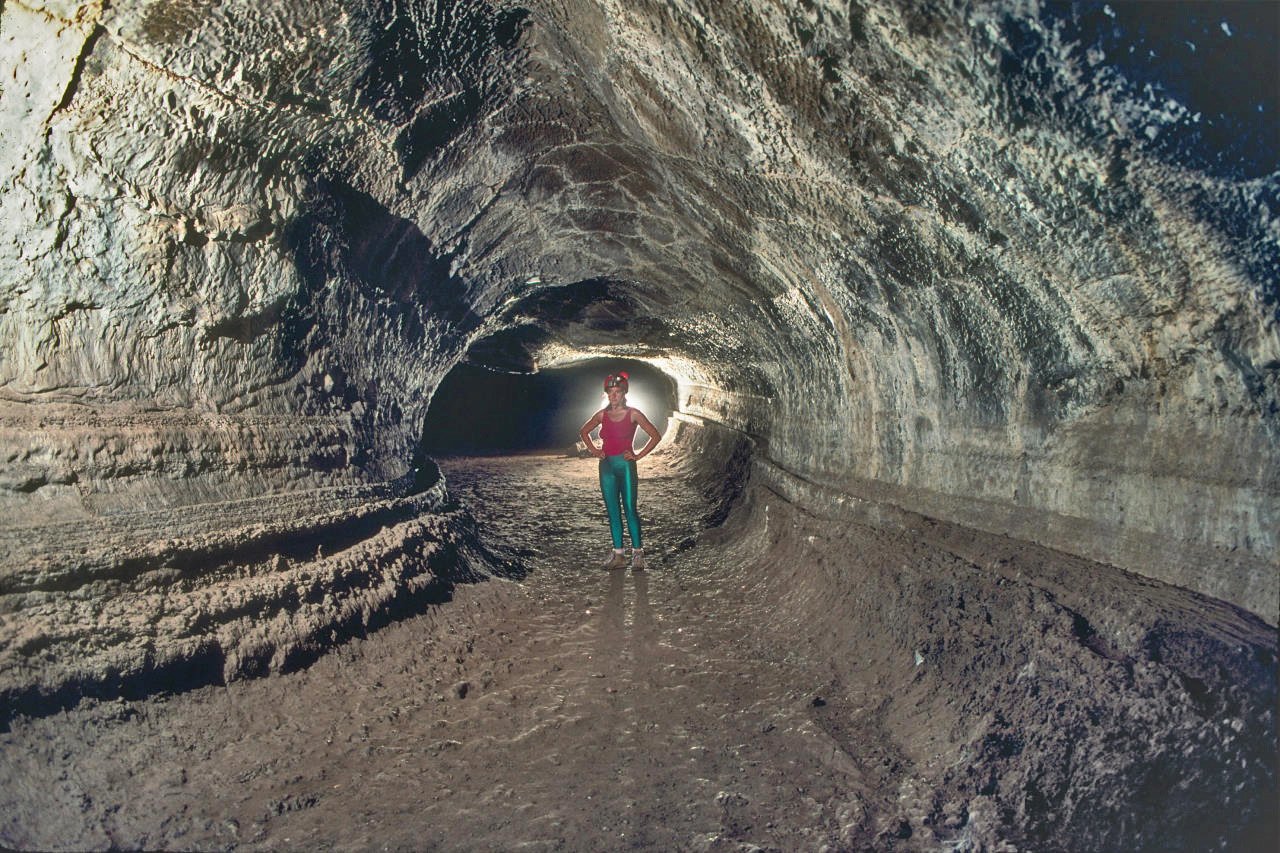
The only limits on the size of a tunnel are the pressure of gravity on the material above the tube, and the stresses of seismic movement. On Earth, with our high gravity and constant (on geologic timescales, at least) earthquakes, lava tubes can still be up to dozens of kilometers long (like Kazumura in Hawaii) and 30m (~100 ft) in diameter, like Manjanggul in South Korea.
On the moon, with its much lighter gravity and seismic stability, the possibilities are much larger. Lunar orbiter images and data from the GRAIL spacecraft (a gravitational imager capable of partially mapping underground structures) imply lava tubes that are potentially hundreds of kilometers long, a kilometer or more in width, and hundreds of meters in height.
By comparison, the largest cave passage in the world (which is not a lava tube) is Hạng Sơn Đoòng in Vietnam, which is around 200 meters tall, 150 meters wide, and several kilometers in length:
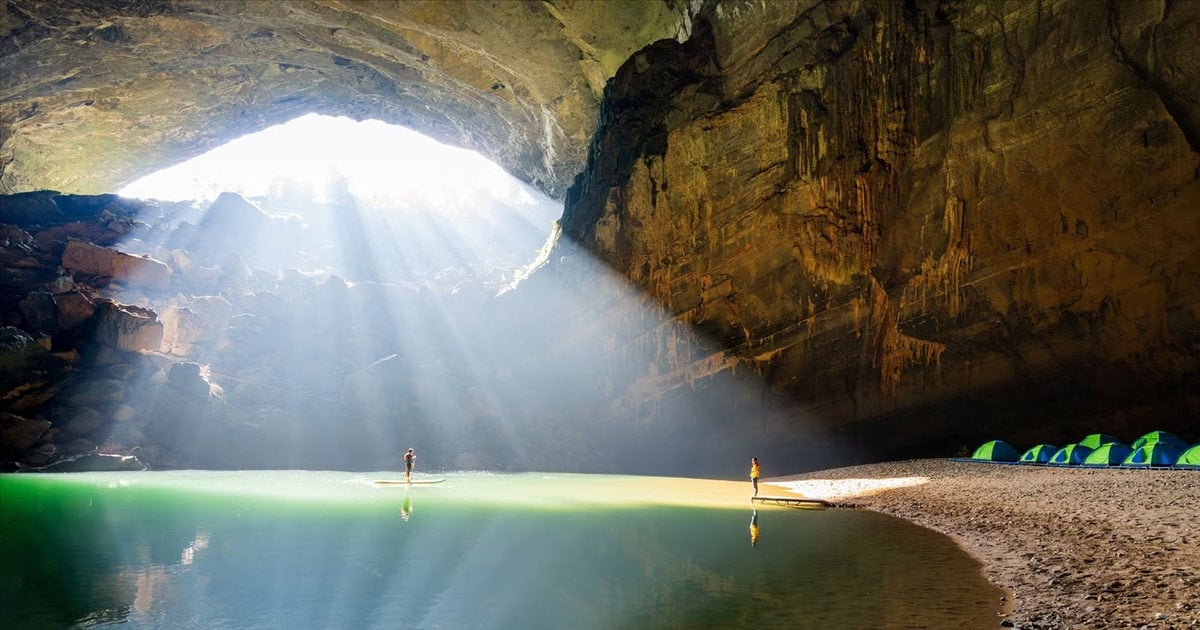
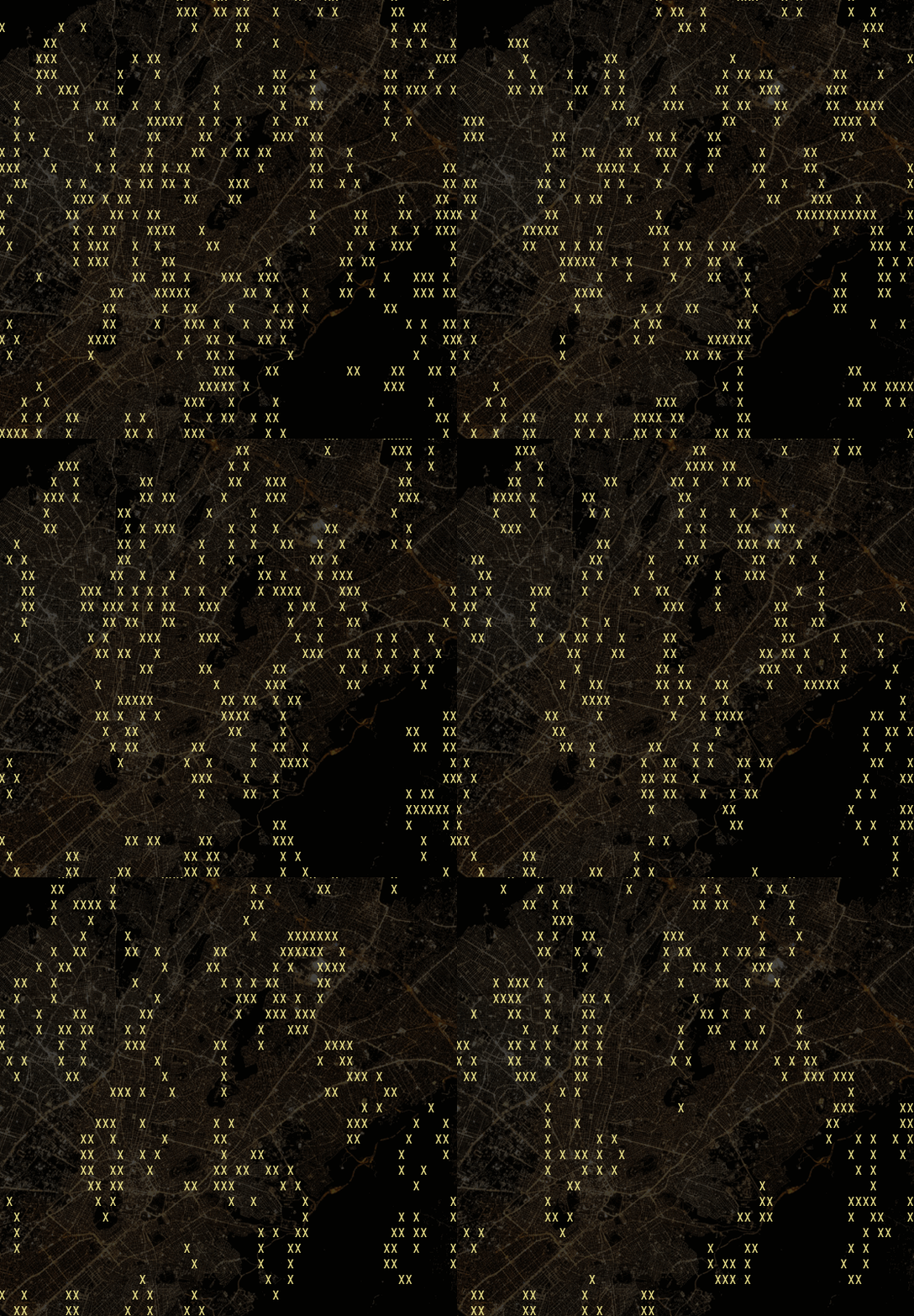
These lunar lava tubes are potentially double that immense height, ten times that width, and dozens of times longer -- large enough to house multiple full-size cities each, should humanity ever experience the need to try to live in such a harsh environment: some of the larger candidate tubes could potentially house multiple Manhattans under a single roof, if you were to stretch them out slightly and shave a couple of floors off of the tallest skyscrapers. Lava tubes provide thermal insulation, radiation protection, and are even potentially places where Luna's exceedingly precious water ice could accumulate.
As such, they are a prime goal for future exploration, including one of the more eccentric-looking robot explorer propositions out there: the Moon Diver.
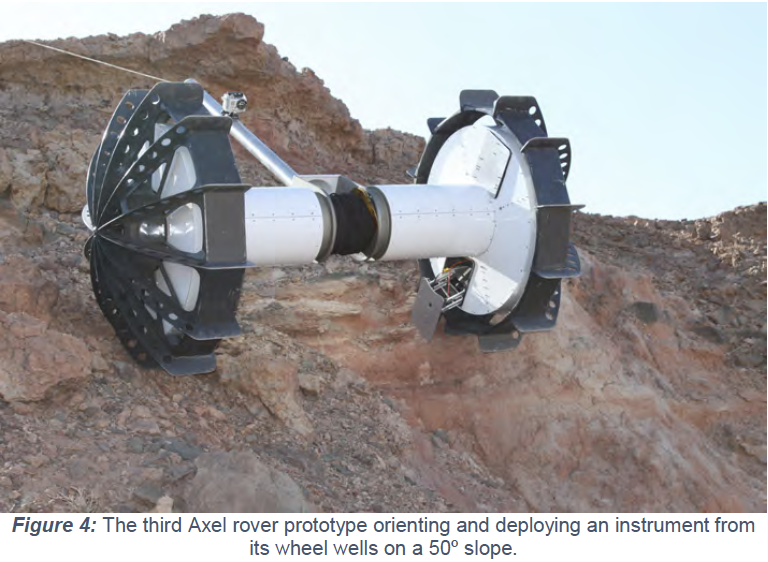
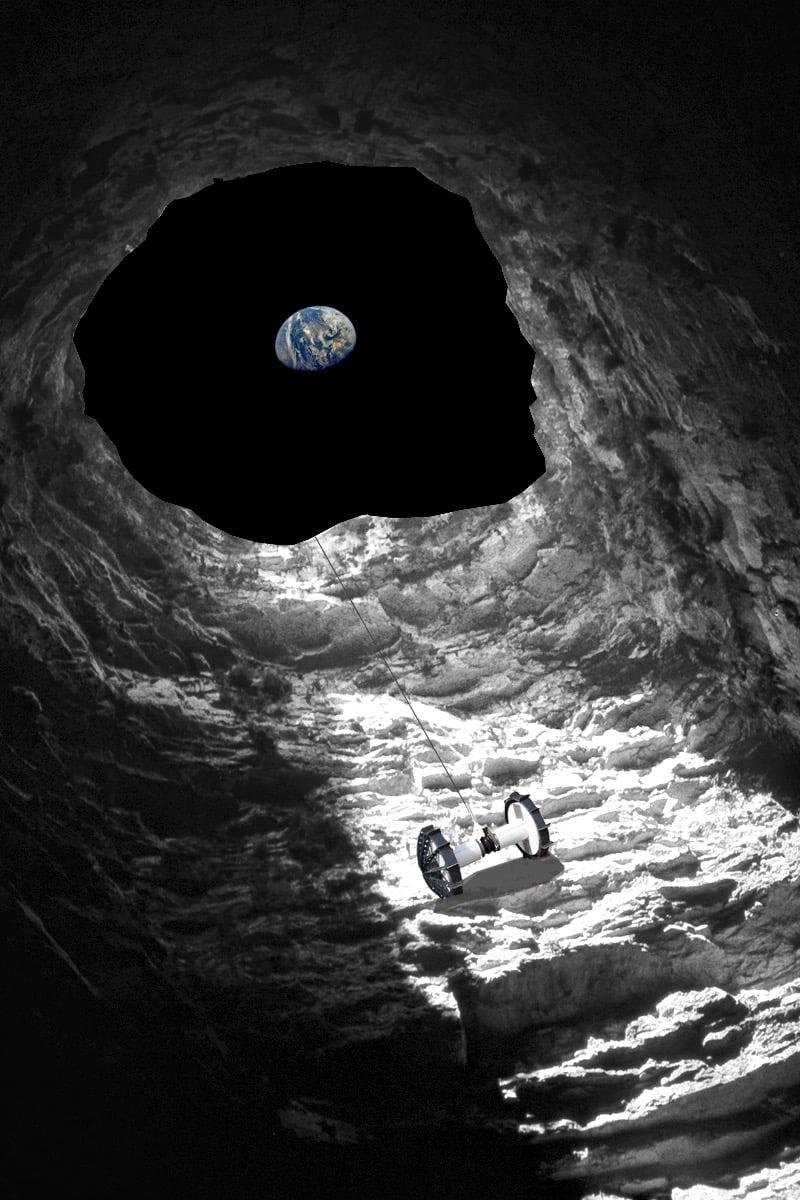
We mostly know about these tubes from their serpentine surface structures, and from places where the ceilings cave into lunar sinkholes. The Moon Diver would land next to one of these sinkholes, anchor itself to its lander on the surface and then lower itself into a cave candidate like Indiana Jones:
Earth's daughter world might be a strange and eerie place to visit again one day. I only hope we can cultivate the respect we would need in order to be worthy of her.
If you enjoyed this, consider subscribing! Changelog letters are delivered weekly on Friday. I will never advertise to you (unless I'm letting you know about something I personally made) or sell your information to anyone.