Patch Notes: Moss Reproduction
I've been down all week with a bad cold after two weeks of airports, so today we'll just have something interesting: most mosses reproduce via rain orgies, toothed cauldrons, and dry winds.
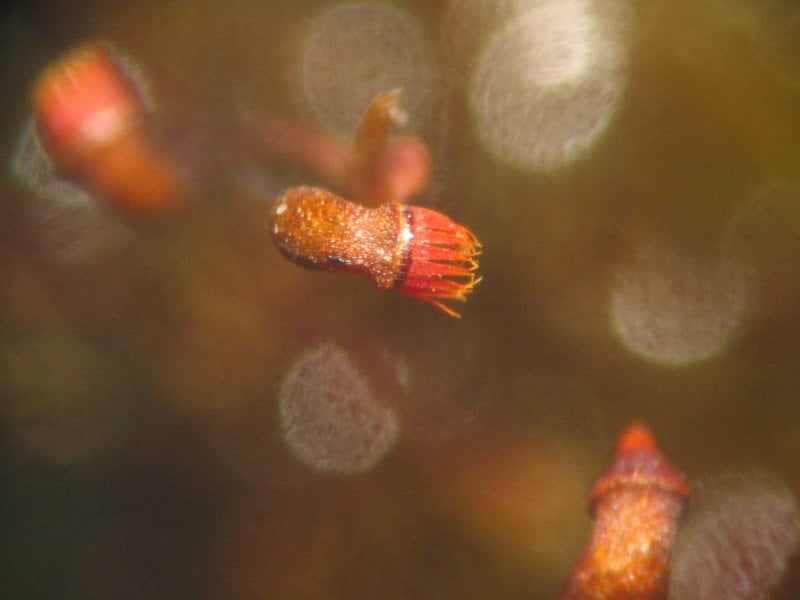
95% of mosses belong to the class Bryopsida, which grows its spores in a tiny container called a sporangium. Releasing the spores too early would guarantee their failure. So the sporangium "cauldron" has a tiny lid: the operculum. When the spores are mature, the operculum falls off, opening the way for the spores to venture out in the world, looking for a damp, nutrient-rich place to root.
A spore will root into the right environment, first extending tiny green tendrils and then growing into the moss plant that most of us are familiar with. A single spore can grow a whole little genetically identical patch of plants, tipped with tiny mossy sex organs. Most moss plants in isolation will never spore again; spores are formed through fertilization (although many species can self-fertilize at the cost of some genetic diversity).
Because moss plants like to cuddle up in their characteristic dense carpets, however, they're rarely in isolation. When rain falls, sex cells from all the plants in the patch scatter and swim through the water (sometimes splashing a meter or more in range), and from this mingling, eggs are fertilized to form sporophytes, and the next generations of spores are prepared. This is why moss loves wet places.
But there's a catch-22 here. Moss finds the rain sexy, but if spores emerge into the rain or even a damp fog, they clump up and fall directly to the ground beneath the mother plant, where all available resources are already claimed. Moss spores need a dry, windy day in order to take height and fly to new surfaces where they can have room to grow (and meet other windborne young moss as well).
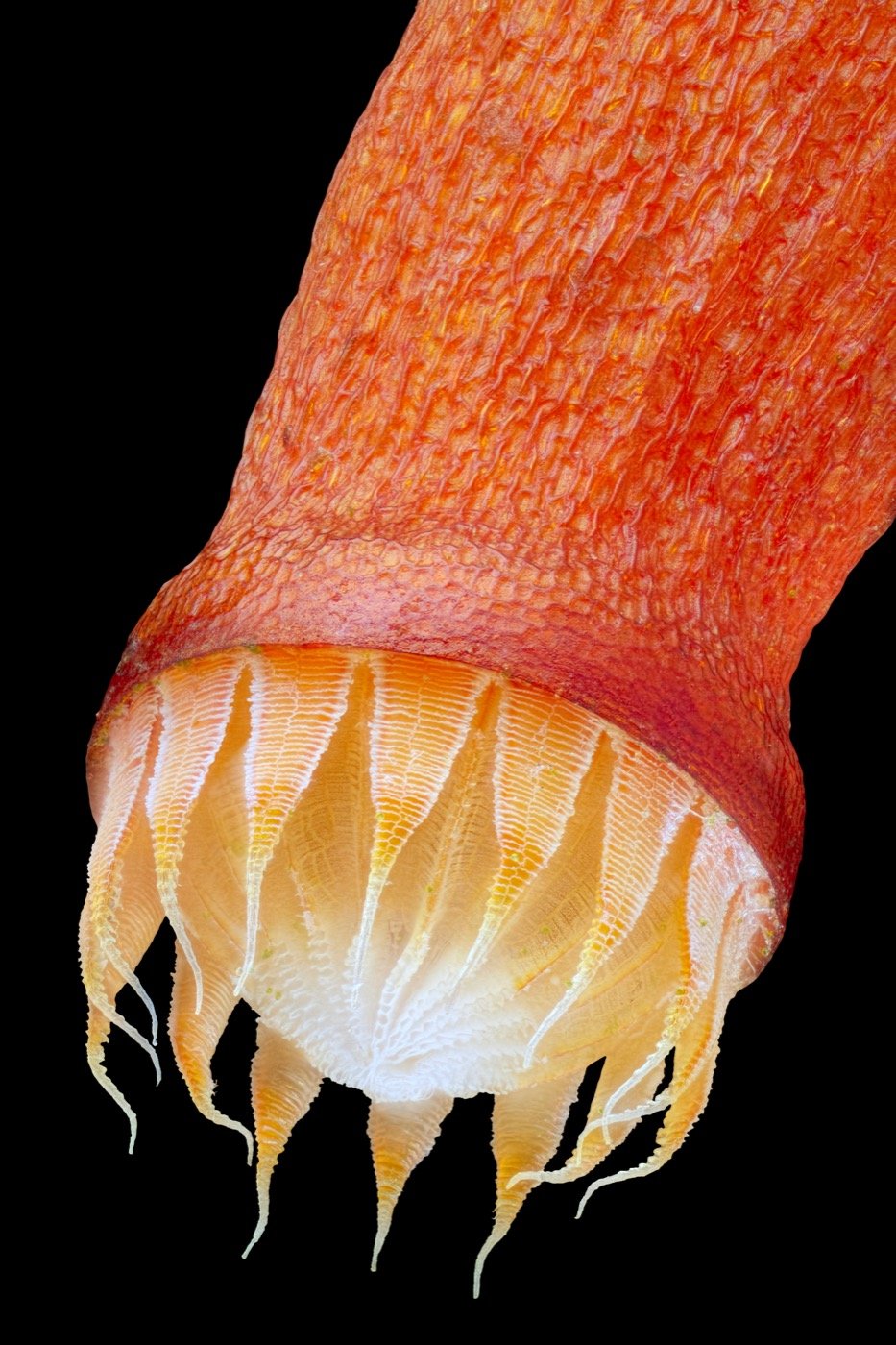
So when the operculum falls away, it actually reveals sixteen jointed "teeth" that (in most species of Bryopsida) fold in protectively when it's wet, closing the sporangium off, and open like flower petals when things dry out, allowing the spores to escape into the wind in safety.
This means that rather than having a single explosive sporing event like some mushrooms (or even other rarer moss species) do, Bryopsida mosses are careful in their strategy, sowing spores into the wind only when the conditions are best for reproduction.
If you enjoyed this, consider subscribing! Changelog letters are delivered weekly on Friday. I will never advertise to you (unless I'm letting you know about something I personally made) or sell your information to anyone.